DID YOU KNOW?

There is two ways of making olive oil extra virgin: first cold pressure and cold extraction:

First Cold Pressure

First cold pressed implies the use of hydraulic pressure which, by crushing the mats (fiber discs) on which is spread olive paste, creates a pressure allowing the oil collect.

The first step of this process is to transform olives into paste. The grindstone smashes the olives in order to form dough. Then, this paste is spread on mats which are stacked one above the other in a hydraulic pressure. Mats are then subjected to a pressure which will release the liquid from the paste and let it flow besides. This substance made of water and oil is recovered and after, separated by settling and bottled.
Today, almost no one uses the term « cold pressed ». Cold pressure is barely employed for olive oil production. Nowadays, cold pressure is preferred as a method of producing olive oil, because it is a cleaner process allowing a better control of fabrication parameters. Some artisanal mills conserved presses and grindstones which, mainly disappeared from tools; it let room for mixers and centrifuges. Hence the term “cold extraction”, which defines precisely the technology, which now replaces the “cold pressure”.


Cold Extraction

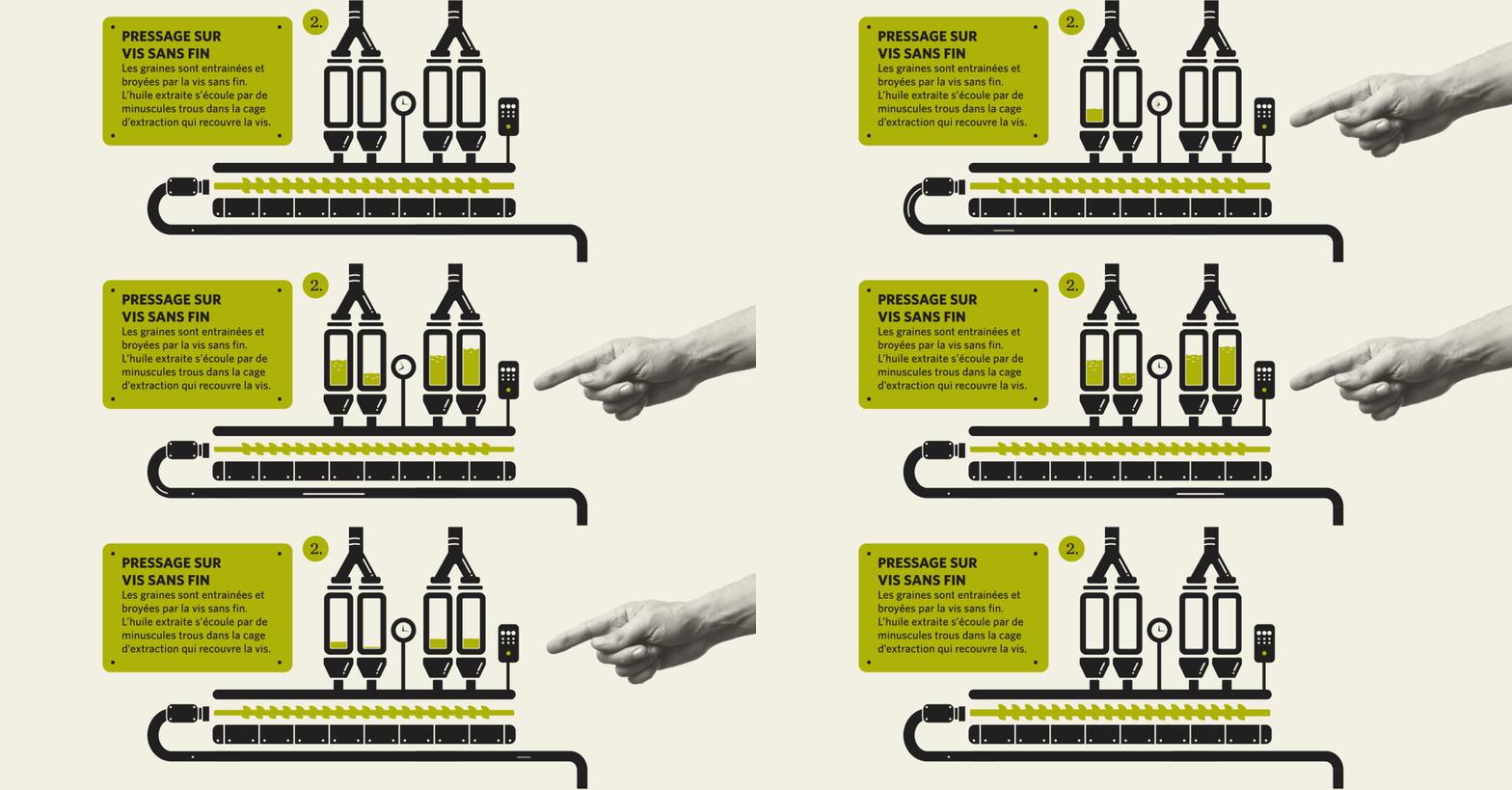
Cold extraction implies the mixing of the olive paste so that oil can be extracted as fine droplets congregating with each other to be harvested.

The first phase is the grinding which consists in fragmenting flesh and core in pieces. Traditionally, this process should be executed by grindstones which, thanks to a slow rotation, cut deeply pulp and kernel. The risk was considerable oxidation, which was not without adverse consequences for the bunch of oil. Modern technology brings a better system which consists in grinding olives with blades, which delicately smash the fruit and prepare the paste for the mixing.

The mixing then facilitates oil extraction, insofar as it breaks the water-oil which can be formed during the milling process. The last phase consists in extracting the oil with a centrifuge. This step allows the oil separation from solid wastes soaked with water contained in the olives. Centrifugation reduces a lot the risks of oxidation. The oil is then packaged in dark glass bottles.

Extra Virgin Olive Oil

The name of olive oils is based on the quality of them and it has been a standard developed by the International Olive Oil Council. Thus, extra virgin olive oil must demonstrate a level of free acidity below 0.8% and comply with specific organoleptic quality criteria. The 2 methods of extraction, the first pressure and extraction are executed cold (below 27 oC, in accordance with international standard).